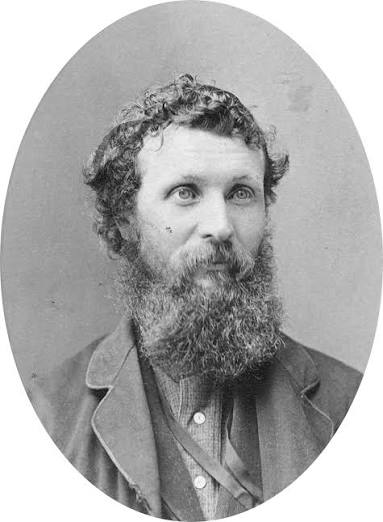
Life Of John Muir
Click on the drop-down buttons to learn more about each phase of Muir’s life.
Birth: April 21, 1838, Dunbar, Scotland, United Kingdom
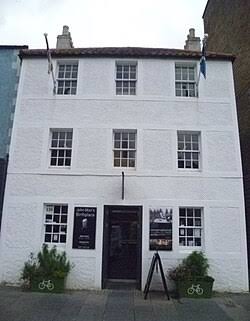
Muir was the third of eight children born to Daniel Muir and Ann Gilrye in Dunbar, Scotland. Muir’s love for nature began in early childhood, developing as he went on long walks with his grandfather. Birthplace of John Muir, pictured above.
Immigration to the United States: 1849, Portage, Wisconsin
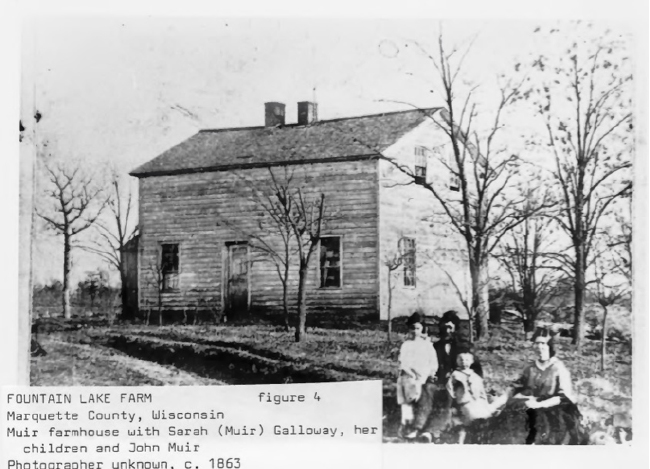
Muir and his family immigrated to the United States when he was a young child. They lived at Fountain Lake Farm but later moved to another farm, Hickory Hill Farm. Fountain Lake Farm, now a national landmark, is pictured above.
Enrolls in College: 1861, University of Wisconsin
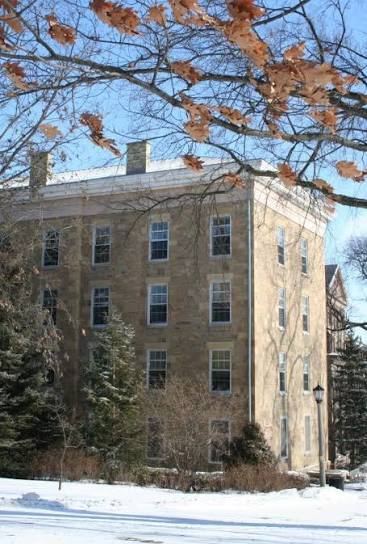
He studied zoology, botany, geology, and engineering, but never graduated from the university. Although Muir left school without a degree, his background in these subjects helped him in his later work. North Hall, the oldest building at the University of Wisconsin and the building where he studied, is pictured above.
Works in Factories: 1864-1867, Canada and the United States
Miur leaves college and heads to Canada, where he starts working in multiple factories, ranging from rake factories to carriage factories. During this time, he sustained an eye injury that encouraged him to leave factory work and start studying nature.
Thousand Mile Walk to the Gulf: 1867, Indiana and Florida
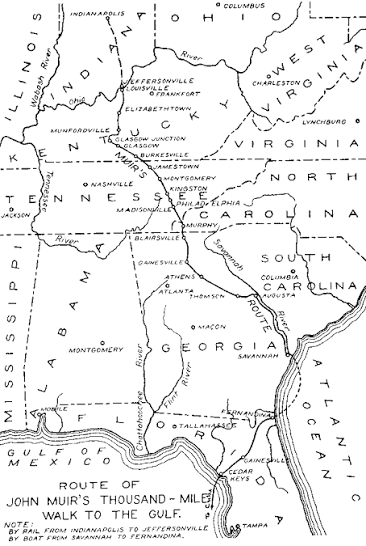
He walks from Indiana to Florida, mostly driven by scientific curiosity, and largely focuses on the botanical aspects of the wilderness. Muir recorded his experiences in a journal, but it was not published until after his death.
Arrives in Yosemite: 1868, California
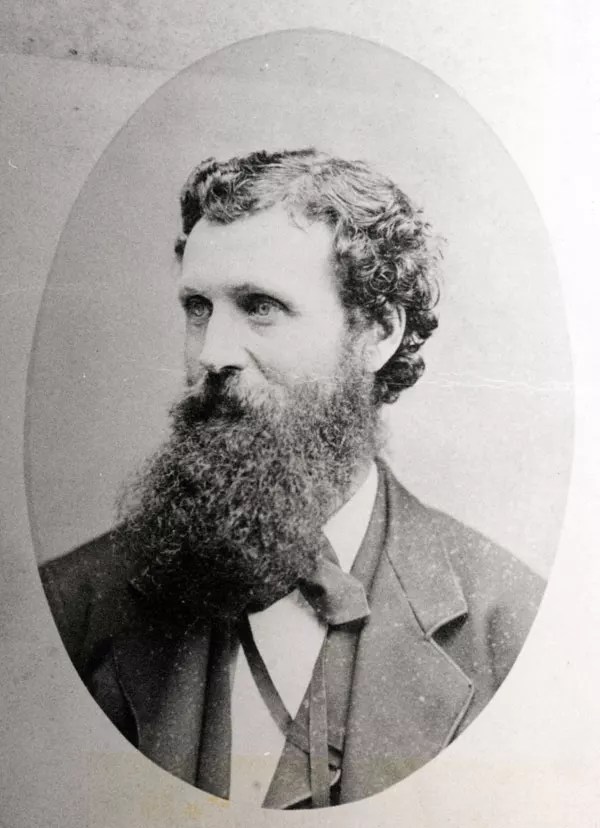
Having heard about the wonders of Yosemite, Muir traveled to see the picturesque valley. Captivated by its beauty, this place became the focal point of Muir’s efforts to preserve California’s landscapes. The next summer, he writes a journal of his experiences working as a shepherd in the Sierra, which is later published as My First Summer in the Sierra. A portrait of John Muir is pictured above.
Published Articles: 1871-1876
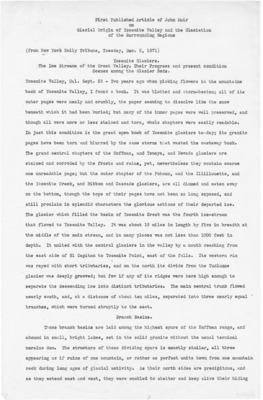
Muir began writing articles about Yosemite’s glaciers and the natural world. He starts building his reputation as an outdoorsman and a lover and expert of nature. He also began writing articles on forest protection, most notably “God’s First Temples: How Shall We Preserve Our Forests?” A copy of the article is pictured above.
Gets Married: 1880
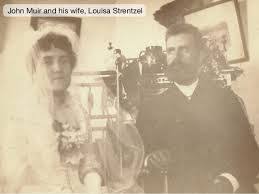
Muir marries Louisa “Louie” Wanda Strentzel, daughter of a Californian farmer. Strentzel supported Muir and his work but preferred to stay home on their ranch, managing her business while he went on his explorations. John Muir and his wife are pictured above.
Birth of First Daughter: 1881
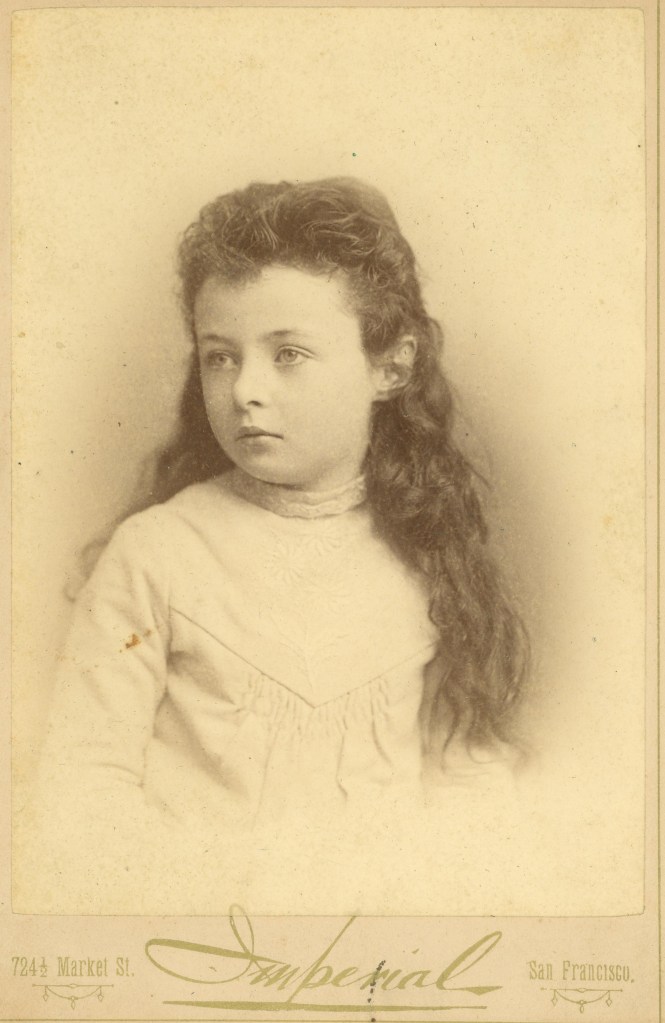
Muir’s first daughter, Wanda “Annie” Muir, is born. She is pictured above.
Birth of Second Daughter: 1886
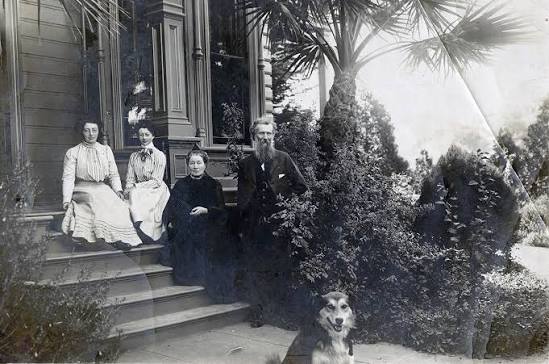
Muir’s second daughter and last child, Helen Muir, was born. She is pictured above with her sister and parents in front of their home in Martinez, California.
Founding of the Sierra Club: 1892
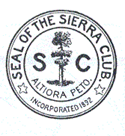
He then founded the Sierra Club, an environmental group dedicated to preserving America’s forests and national parks. The organization grew to be one of the largest environmental organizations in the United States. John Miur served as its president until his death. Original logo of the club pictured above.
Published The Mountains of California: 1894
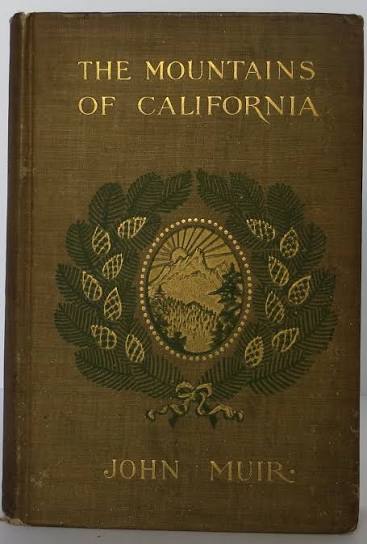
Muir published his first novel, The Mountains of California. Like his later novels, this book details the beautiful flora and fauna within the Sierra Mountains. Original cover pictured above.
Theodore Roosevelt Visits Yosemite: 1901
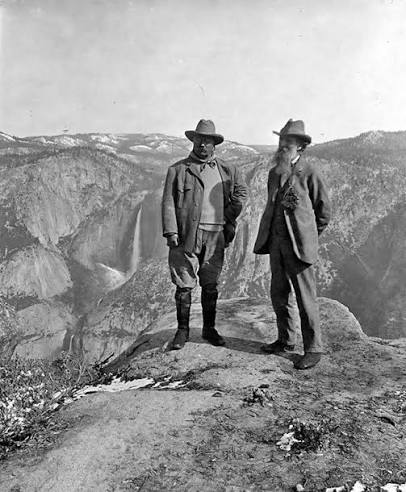
President Theodore Roosevelt joined John Muir on a camping trip in Yosemite. The three-day camping trip was fundamental for the establishment of environmental laws in the United States. After listening to Muir speak for three days about the importance of preserving America’s wilderness, Roosevelt returned to Washington, D.C. He signed legislation establishing five more national parks and strengthening protections for Yosemite National Park. Pictures above are of Theodore Roosevelt and John Muir during this historic camping trip.
Published Stickeen: 1904
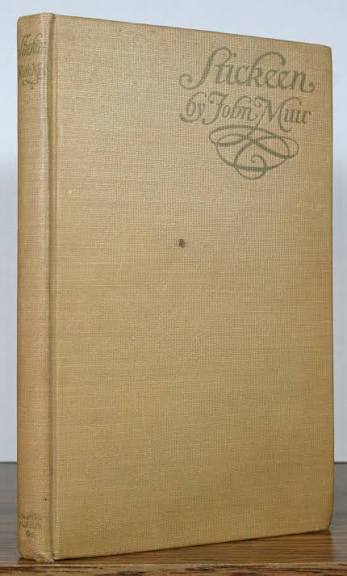
Muir published his book Stickeen, which is named after a dog he traveled across Alaska with. This book details his love and care for animals, as well as his view of animal consciousness. The book’s cover is pictured above.
Published My First Summer in the Sierra: 1911
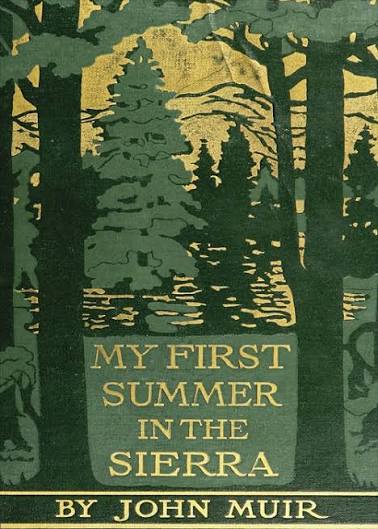
Muir edited and published his notes from his first summer in the Sierra. It is one of Muir’s better-known works and showcases the moment that inspired Muir to protect the Yosemite Valley. Cover pictured above.
Published The Yosemite: 1912
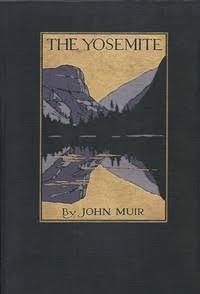
The Yosemite was another one of John Muir’s books that introduced readers around the world to the splendor of the Yosemite Valley. Pictured above is the cover.
Hetch Hetchy Valley: 1913
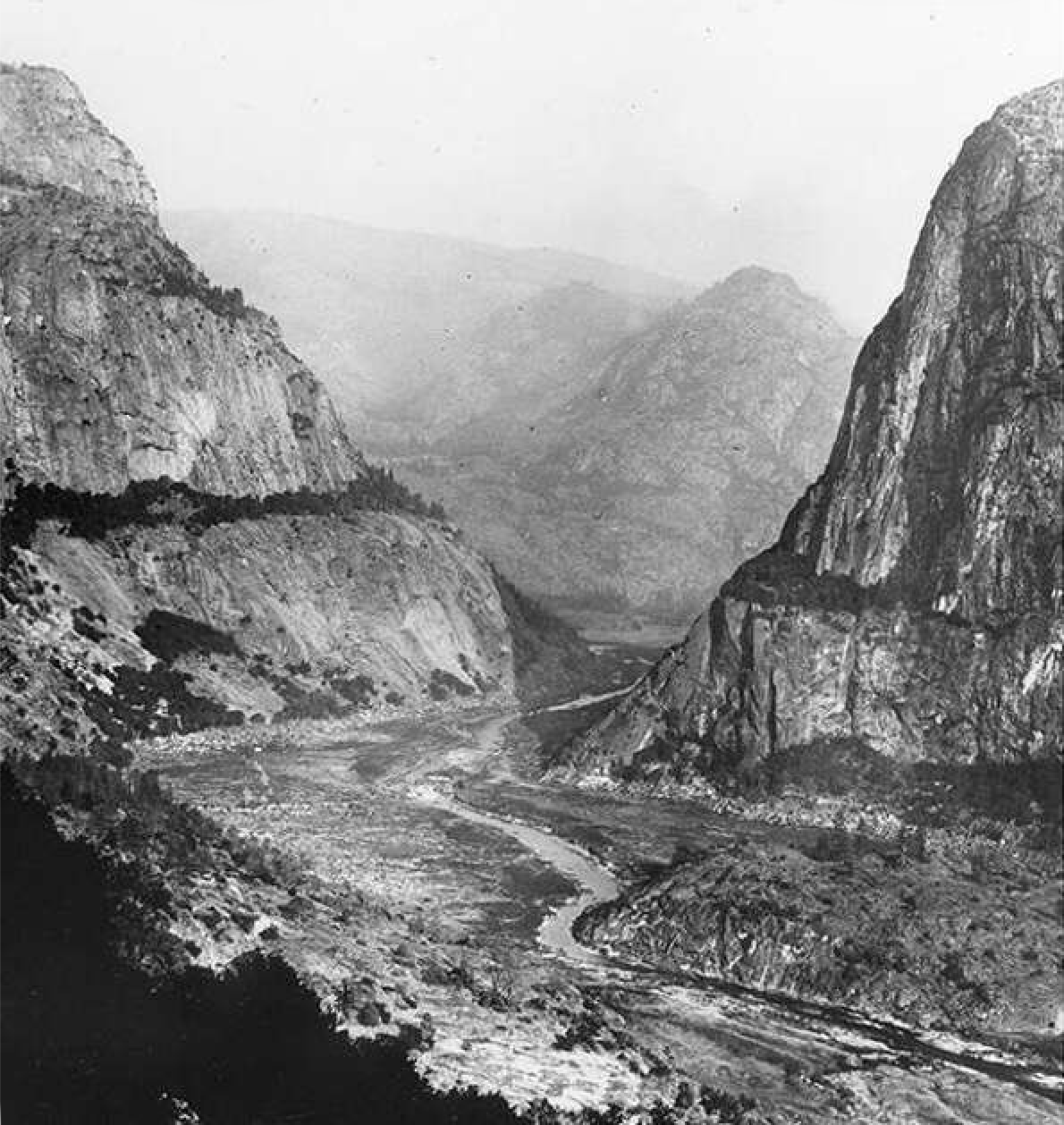
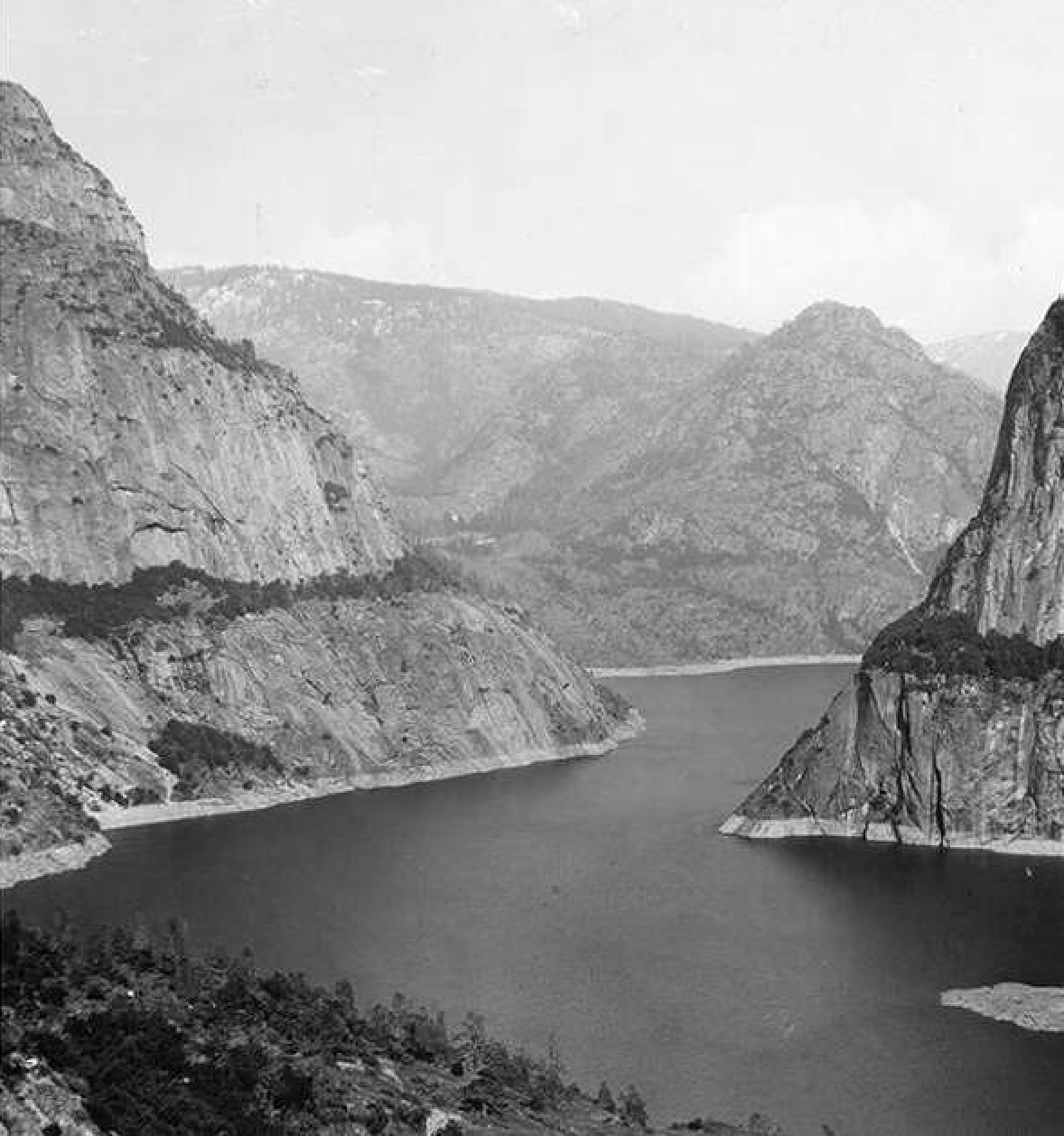
Before and After the Dam John Muir’s life was not only a series of environmental wins; there were losses. Most notably, the damming of the Hetch Hetchy Valley. It was proposed that Hetch Hetchy be dammed to provide water for the residents of San Francisco, but John Muir and the Sierra Club opposed it. Muir and the club lost the fight against politicians to preserve the valley, which he considered to be as beautiful as the Yosemite Valley. Muir considered this an atrocious act against nature, San Francisco’s biggest sin. Pictured above are the before-and-after images of the dam’s construction.
Published The Story of My Boyhood and Youth: 1913
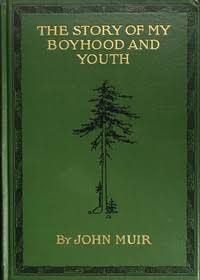
Muir published a series of essays about his lifelong love for the wild, dating back to his childhood in Scotland. The cover is pictured above.
Death: December 24, 1914, Los Angeles, California
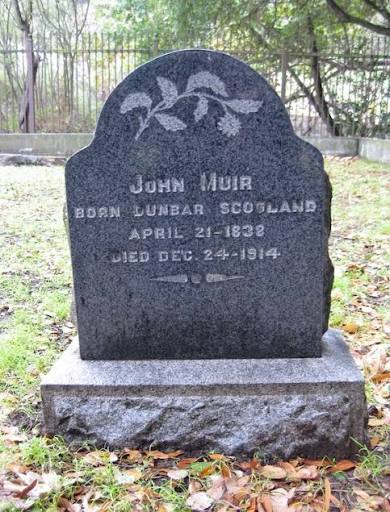
Muir passed away from a lung infection at the age of 76 while visiting his daughter in the Mojave Desert. He is laid to rest in Martinez, California. The picture above is his tombstone.
 Sunshine's Field Notes