Preserving the Wilderness
This page is dedicated to discussing John Muir’s book Our National Parks. The book is a primary source written by John Muir himself and delves into the need for preservation.
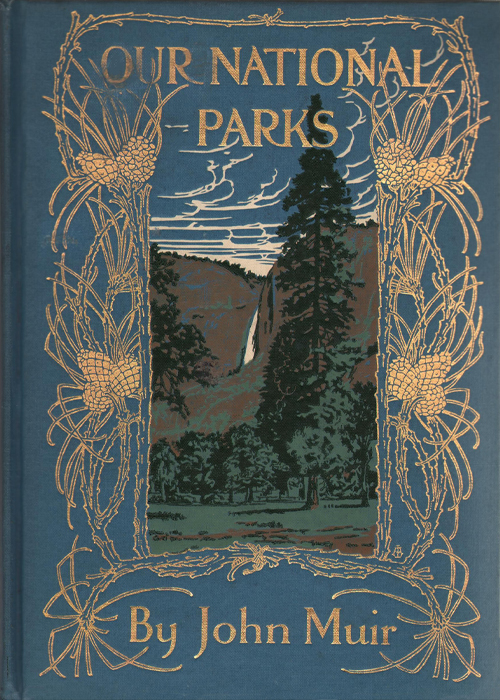
Our National Parks
In 1901, when Our National Parks was published, John Muir was already a notable figure due to his writings and rising political influence. So, after spending a great deal of time and effort exploring America’s wilderness and National Parks, Muir wrote Our National Parks to encourage Americans to continue supporting the preservation of America’s landscape.
Summary
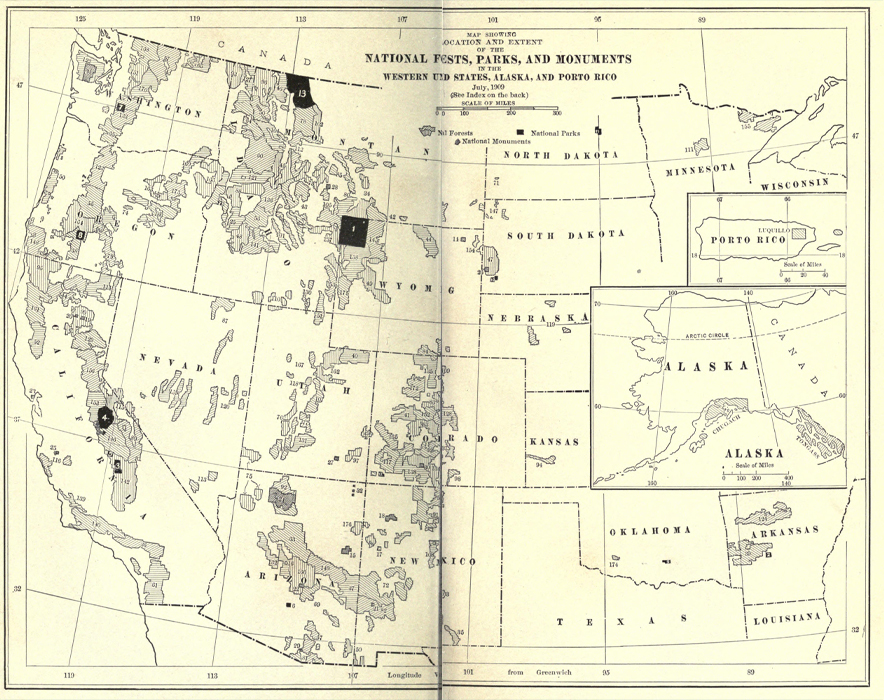
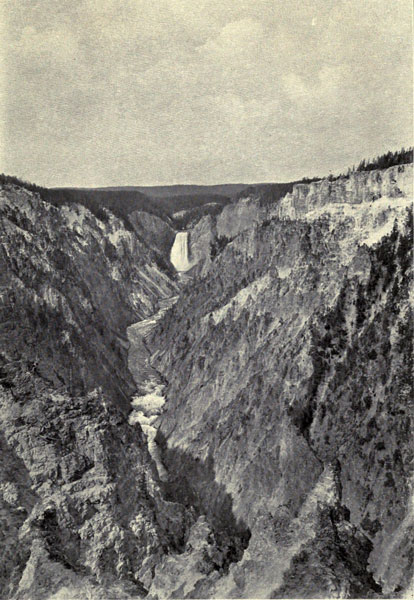
Our National Parks describes the landscapes of America’s national parks and forests. Like My First Summer in the Sierra, Our National Parks details the region’s geography, flora, and fauna. This book extends beyond the Sierra Nevada and includes not only Yosemite but also Yellowstone National Park, Sequoia National Park, and General Grant National Park (now Kings Canyon National Park). This book is also highly political, with Muir making key points about the need to preserve and protect nature from commercial exploitation. Muir writes, “Through all the wonderful, eventful centuries … God has cared for these trees, saved them from drought, disease, avalanches, and a thousand straining, leveling tempests and floods; but he cannot save them from fools — only Uncle Sam can do that” (Muir Chapter 2). Our National Parks is not only a book but a political argument for the protection of the American wilderness because we, as Americans, have a responsibility to protect them from exploitation.
Historical Importance
Our National Parks is historically important because it succesfully garnered support. It influenced government policy, encouraged citizens not to view nature merely as commercial, and inspired generations to join the conservation and preservation movement. In his poetic descriptions of nature, John Muir argued that preserving nature benefits not only the environment itself but also people because of its spiritual importance. This resonated with his readers, who were convinced by the descriptions of the national parks’ beauty and believed that these places should remain untouched by those who sought to exploit these landscapes for their lumber. With public influence, this laid the groundwork for support for future conservation and preservation efforts.
 Sunshine's Field Notes