Exploring the Wilderness
This section details John Muir’s experience in the Sierra, as recounted in the primary source he wrote himself, My First Summer in the Sierra.
My First Summer in the Sierra
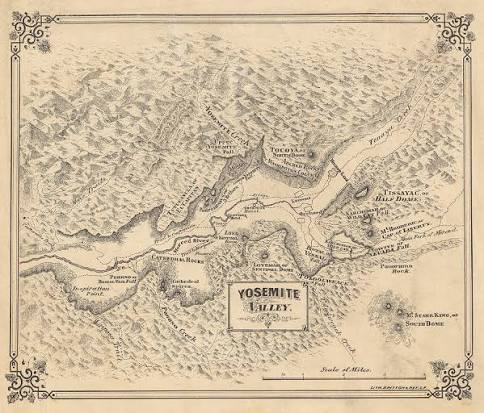
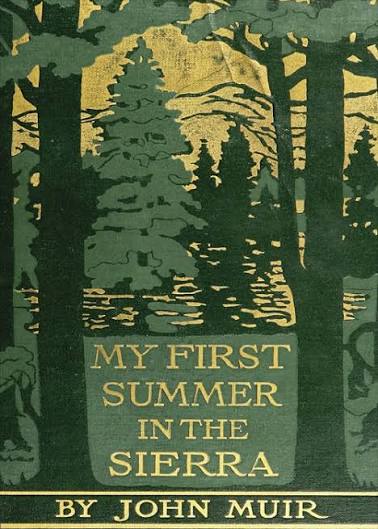
In 1867, after his eye injury, Muir dedicated his life to studying and exploring the wilderness. After his infamous, thousand-mile walk to the Gulf, Muir visited the Yosemite Valley in California. In 1869, he spent his first summer in the Sierra and wrote down his experiences while visiting the valley. Mesmerized by the valley’s beauty, Muir kept his field notes and rewrote them years later for publication, inspiring people to preserve America’s wilderness and encouraging politicians to push legislation to protect these places. These journal entries were published in 1911.
Summary
While working as a sheepherder in the central valley of California, John Muir traveled to Yosemite in the summer. During his travels, Muir spent a great deal of time describing all the various flora, fauna, and geological formations. Not only did he describe animals and plants currently living in the area, but he also described animals that could have lived in the past, such as mastodons. In his observations, Muir is also critical of human interference with the wilderness and stresses the spiritual importance of nature. Muir writes,” Oh, these vast, calm, measureless mountain days, inciting at once to work and rest! Days in whose light everything seems equally divine, opening a thousand windows to show us God. Nevermore, however weary, should one faint by the way who gains the blessings of one mountain day; whatever his fate, long life, short life, stormy or calm, he is rich forever” (Muir Chapter 2). Throughout the book, Muir stresses the spiritual importance of nature, further encouraging the public to appreciate the outdoors.
Historical Importance
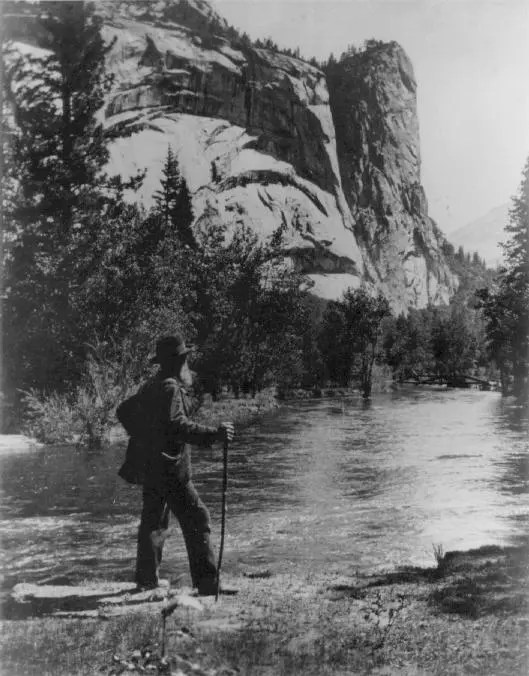
My First Summer in the Sierra is a historically important document because it showcases one of the moments that inspired John Muir to care about nature and serves as a record of the region’s flora, fauna, and geological formations. John Muir’s summer in the Sierra was a turning point in his career as a preservationist and author, as his love for this landscape drove him to become a well-known figure in the preservationist movement. The book also became beloved by its readers upon its release, encouraging the public to care about the wilderness in their own country. This book, along with John Muir’s other writings, was instrumental in securing public and political support for the United States’ National Park system.
 Sunshine's Field Notes